As the client’s brand matured, the sales kept growing, but it was unclear how much of the growth came from promotional effort versus volume that would have happened anyway. When an omnichannel campaign runs concurrently across multiple channels, non-normalized data makes it difficult to get an accurate read on which channels are driving true lift. Untangling this requires separating spend patterns, and comparing performance across markets and over time. The client did not want another retrospective report, they needed clear direction on how to invest their marketing budget going forward.
Approach
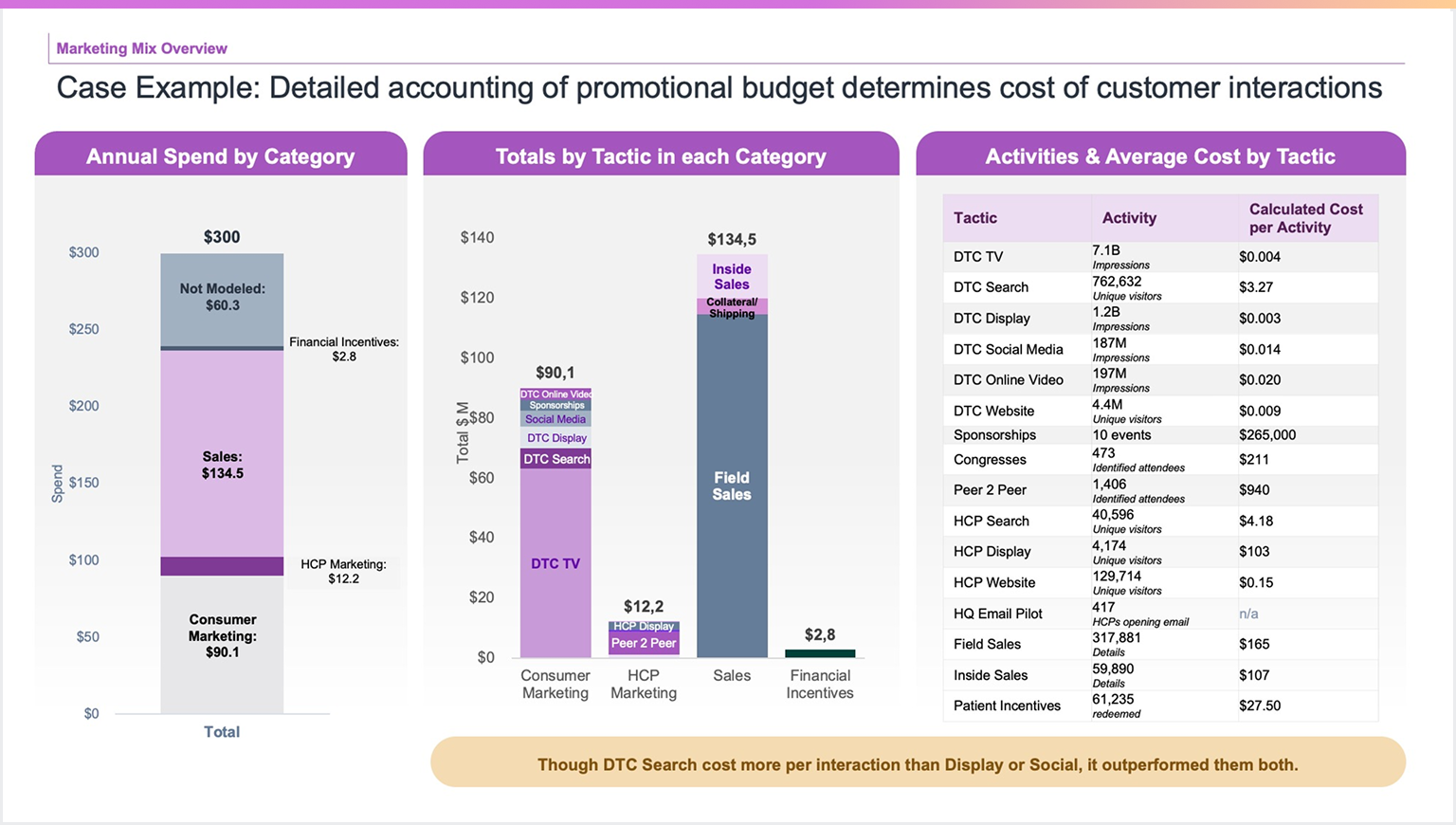
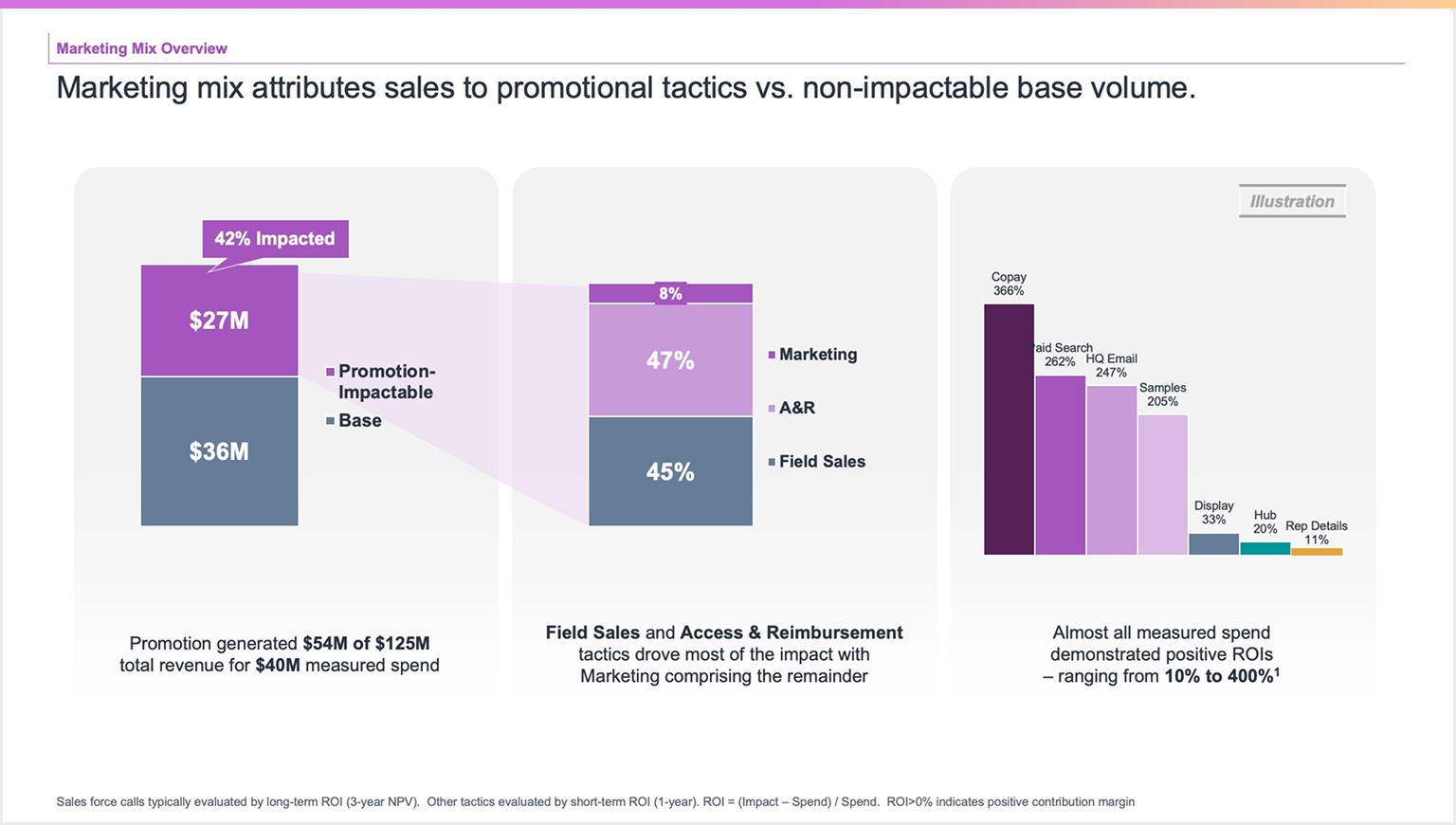
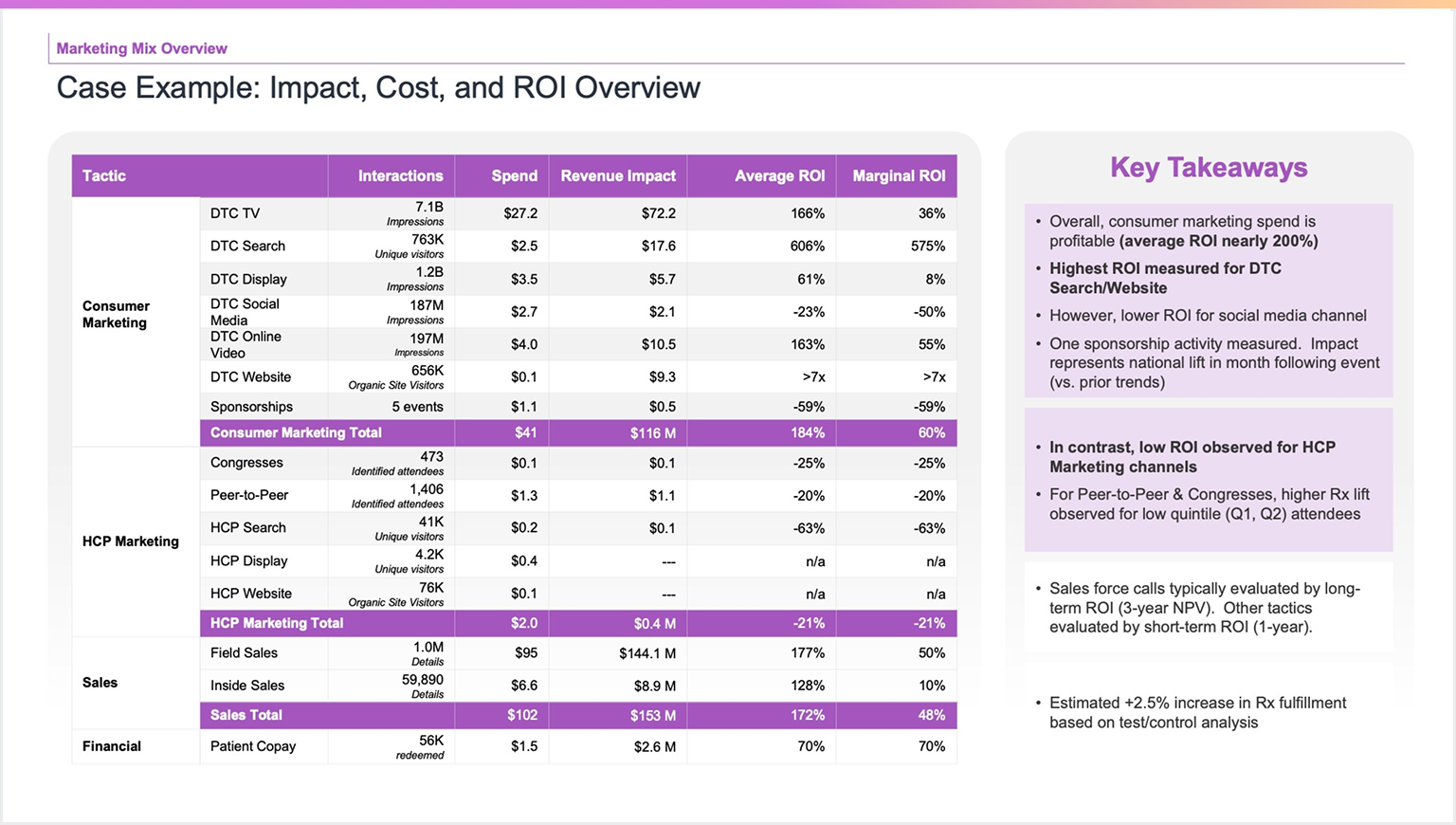
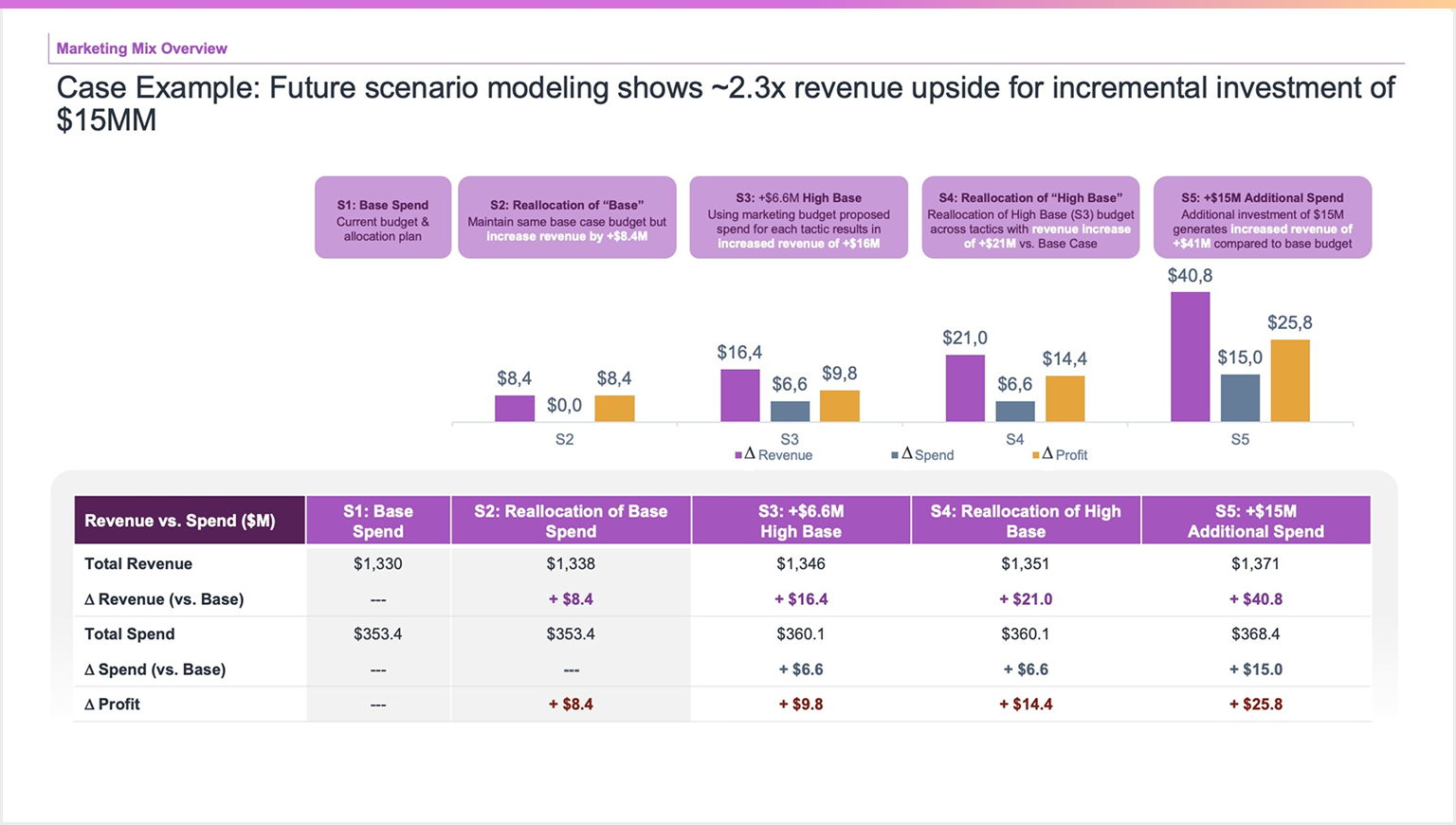
Qral built a marketing mix framework to measure both consumer and HCP channels alongside field sales and financial incentives. Qral standardized the measurement of cost per interaction so that TV impressions, search clicks, rep details, and copay redemptions could be compared on equal footing. The framework split total sales into base volume versus promotional lift, then measured each tactic’s effect against its spend to calculate average and marginal ROI. Qral then applied forward-looking scenarios to compare the revenue impact of budget reallocation.
Business impact
The analysis showed that apparent performance often did not reflect true impact. Search and Website, two channels assumed to be minor, returned ROI above 500 percent once their actual lift was isolated. Conversely, social media, long treated as a reliable contributor, came back negative. That reversal reshaped the following year’s plan: the client reallocated budget away from tactics that only seemed productive toward those that the framework proved were earning results. The scenario modeling showed an added $15M in spend could return nearly $41M in incremental revenue.
Standardized measurement for spend; separated lift - base volume vs. promotional tactics; results for impact, cost and ROI; future scenario modeling