On average, patients with rare diseases wait nearly five years for a correct diagnosis while they cycle through physicians. Six in ten are misdiagnosed, and many never receive a diagnosis. For our client, every delay meant a patient was not receiving appropriate treatment. They needed to reach the right stakeholders sooner for earlier disease recognition and treatment, which required a better understanding of the disease signature. Conventional claims filtering, which relies on a single diagnostic code, returns a cohort many times larger than the true patient population. The client engaged Qral to build a more precise approach to patient identification.
Approach
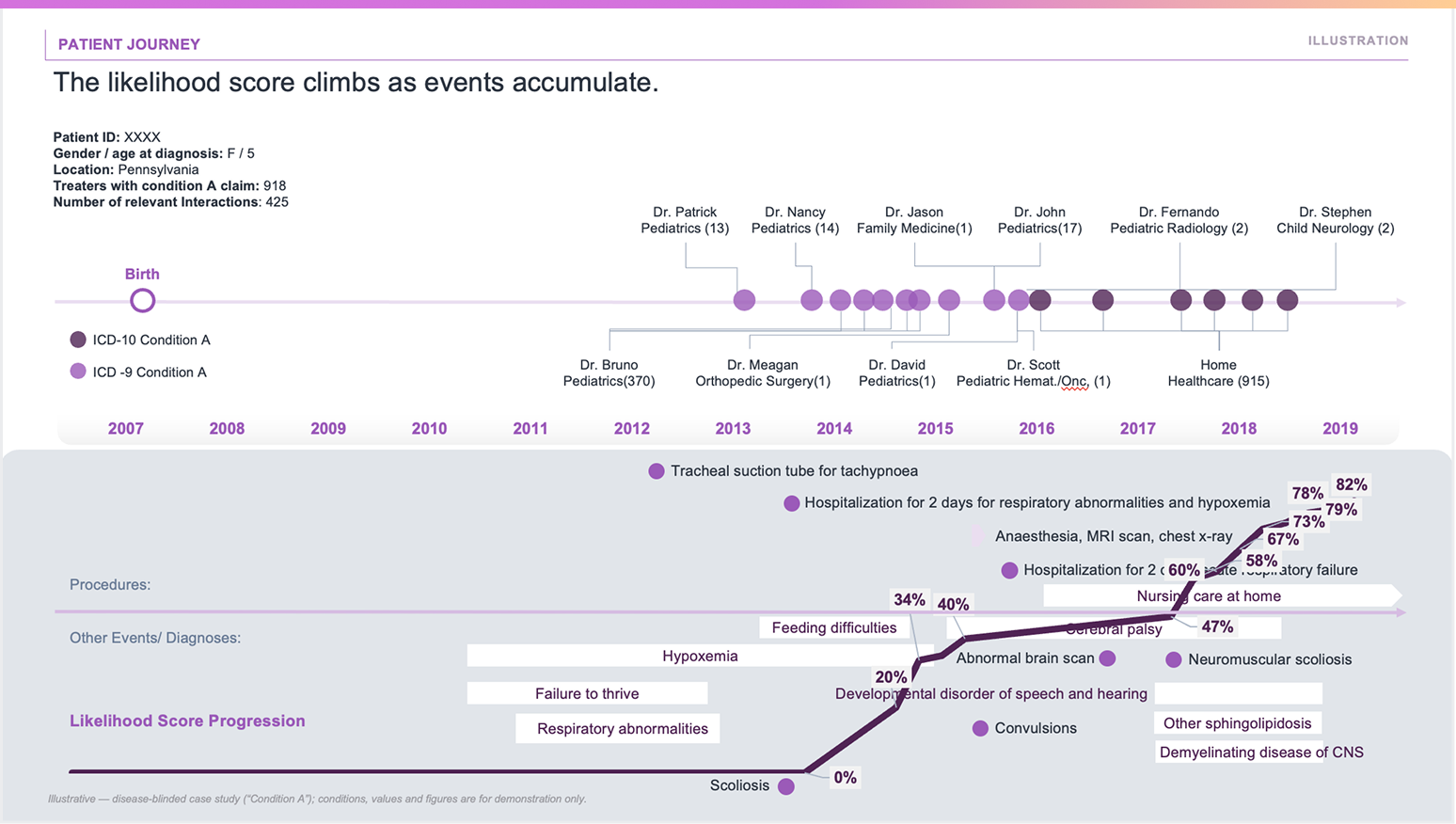
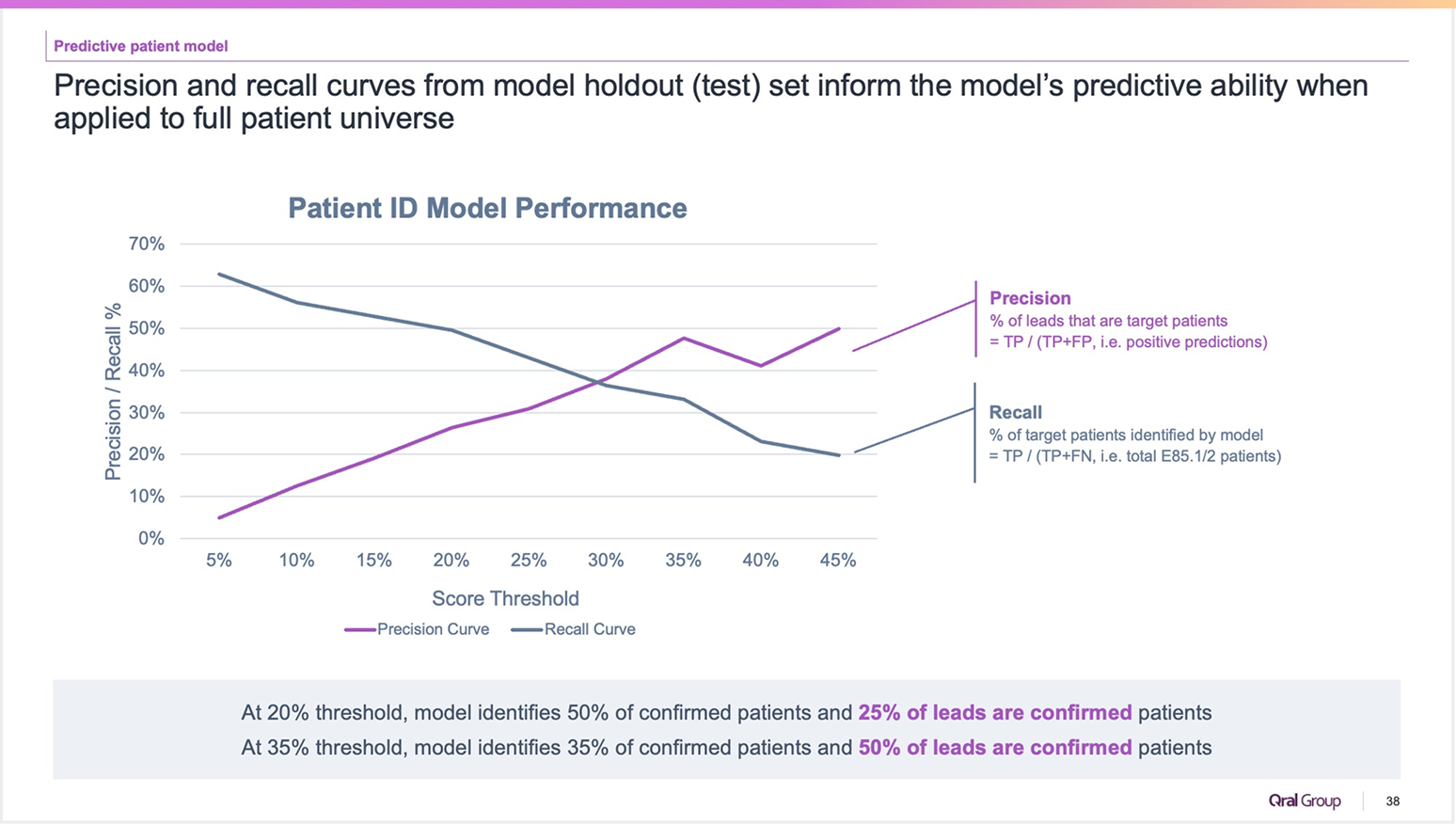
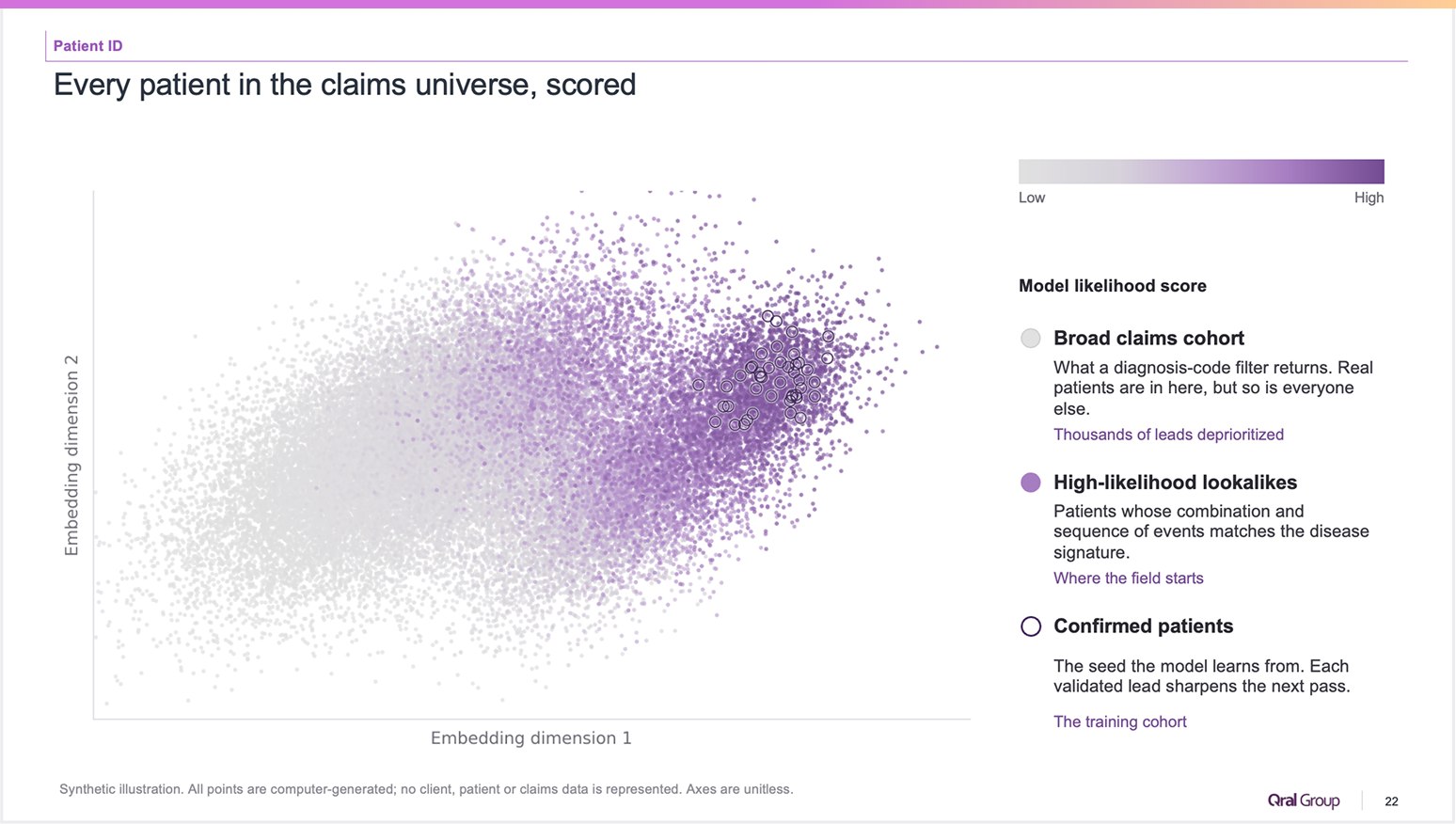
Qral built a machine learning model that not only identified patients, but also surfaced the misdiagnoses, referral patterns, and treater networks surrounding them. Drawing on Qral’s rare-disease experience, the team trained the model to start from known cases and work backward, reading claims signals such as repeated misdiagnoses and patterns of escalating care to flag patients whose treatment milestones closely resembled the disease signature. Qral assigned likelihood scores to prioritize the strongest candidates. A rigorous validation loop using known cases and field feedback sharpened the model’s ability to find true patients.
Business impact
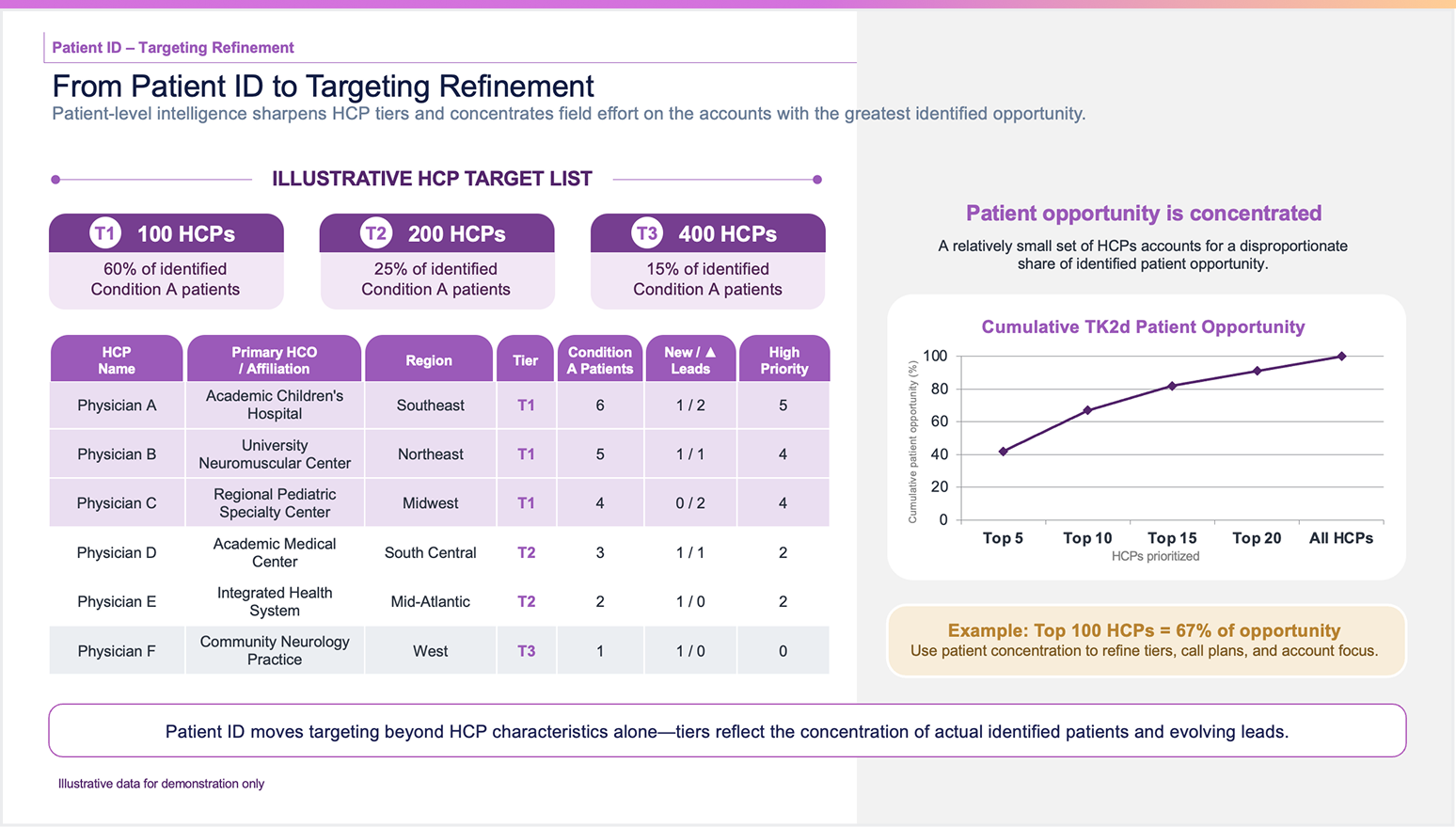
The model revealed that identified patients were concentrated among a relatively small set of HCPs. This sharpened HCP tiering and call planning, directing the client’s field team toward the physicians most likely to treat undiagnosed patients.
A third of the patients that Qral’s model surfaced were identified more than a year before their diagnosis was confirmed. Roughly a quarter of flagged patients were confirmed cases, against a base rate of about 2% in the unfiltered cohort.
Training model using patient journeys; calibrating for precision and recall; scoring likelihood for validation; target refinement